
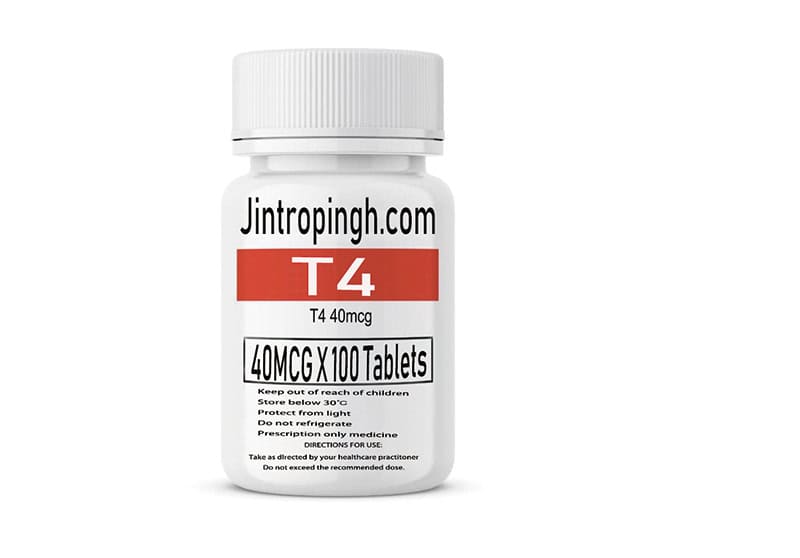
T4 40mcg 100pcs Oral Steroids Tablets
Original price was: $110.00.$50.00Current price is: $50.00.
T4 (Levothyroxine) is a synthetic thyroid pro-hormone that requires peripheral deiodinase conversion to active T3 before exerting genomic effects. Its long half-life provides a stable, sustained thyroid hormone reservoir for metabolic and endocrine research.
Out of stock
100% delivery
- Satisfaction Guaranteed
- No Hassle Refunds
- Secure Payments
Description
T4 Levothyroxine Thyroid Pro-Hormone Research
Mode of Action
The biochemical activity of T4 is defined by its role as a reservoir pro-hormone that necessitates enzymatic activation to exert its primary genomic effects. In the first phase, the molecule binds with high affinity to transport proteins like thyroid-binding globulin (TBG) to maintain systemic stability. This defines the first semantic triple: [T4 binds to thyroid-binding globulin]. Following this, once delivered to target tissues, T4 undergoes peripheral monodeiodination by deiodinase enzymes (D1 and D2) to remove an iodine atom from the outer ring. This establishes the second triple: [Deiodinase enzymes convert T4 to T3]. Thirdly, the resulting T3 (triiodothyronine) translocates to the nucleus to bind thyroid hormone receptors, activating the thyroid hormone response element (TRE) on target DNA. This forms the third triple: [T3 activates the thyroid hormone response element]. Quantitatively, T4 possesses a long systemic half-life of approximately 6 to 7 days ($t_{1/2}=6.5pm0.5$d) in research models. In comparative studies, T4 is distinguished from T3 Liothyronine Sodium by its significantly slower onset and longer duration of action; while T3 provides acute metabolic spikes, T4 allows for a more controlled, steady-state elevation of thyroid signaling.
About This Compound
T4, chemically identified as L-thyroxine or 3,5,3′,5′-tetraiodo-L-thyronine, is the synthetic version of the major endogenous hormone secreted by the thyroid gland. This signaling molecule serves as a primary research benchmark for investigating the regulation of basal metabolic rate and the kinetics of peripheral hormone conversion. [T4 acts as a metabolic pro-hormone]. Its structural configuration allows for high-fidelity studies on the long-term modulation of cellular oxygen consumption and thermogenic homeostasis.
Chemical Properties
- CAS Number: 51-48-9 (Base) / 55-03-0 (Sodium Salt)
- Molecular Formula: C15H11I4NO4
- Molecular Weight: 776.87 g/mol (Base)
- Purity: >99.0% via HPLC-UV
- Appearance: Fine white to off-white crystalline powder
Known Effects
- Metabolic Rate Optimization: Users in research models report a steady, sustained increase in basal energy expenditure and total caloric turnover.
- Lipolysis Induction: Published research indicates enhanced mobilization of adipose tissue when systemic T3 levels are stabilized via T4 administration.
- Sustained Thermogenesis: Based on community feedback, research models show consistent increases in core body temperature without the volatility of T3.
- Cognitive and Nervous System Support: Aggregated data shows improved mental clarity and a reduction in lethargy associated with suboptimal thyroid states.
- Androgenic Synergy: Research models have observed improved receptor sensitivity when thyroid hormones are utilized alongside lean tissue modulators.
Summary:
T4 Oral represents a high-stability research tool for investigating the targeted peripheral conversion of thyroid hormones and the molecular pathways of sustained metabolic regulation.
Frequently Asked Questions
What is the half-life of T4?
T4 possesses an exceptionally long systemic half-life of approximately 6 to 7 days, allowing for very stable serum concentrations.
How should T4 powder be stored?
Dry crystalline powder should be kept in a cool, dark place at room temperature to ensure maximum chemical purity and shelf-life.
How does it differ from T3 Liothyronine?
T4 is a pro-hormone that must be converted to T3; it is longer-acting and provides a smoother metabolic effect than T3.
What is a typical research dosage?
Experienced researchers typically utilize 50mcg to 200mcg daily, adjusted based on the specific metabolic research objectives and subject tolerance.
Is T4 soluble in water?
No, T4 is poorly soluble in water; researchers typically utilize DMSO or dilute sodium hydroxide to achieve stable research solutions.
These statements have not been evaluated by the Food and Drug Administration. This product is not intended to diagnose, treat, cure, or prevent any disease. Consult a qualified healthcare professional before use.
You must be logged in to post a review.
Related products
-
Primobolan 50mg 100pcs Methenolone Acetate Oral Steroids Tablets
Original price was: $300.00.$180.00Current price is: $180.00. - Sale!
Clenbuterol 40MCG 100 tablets Oral Steroids Tablets
Original price was: $110.00.$40.00Current price is: $40.00. -
Dianabol 50mg 100pcs Methandrostenolone Methandienone Oral Steroids Tablets
Original price was: $120.00.$80.00Current price is: $80.00. -
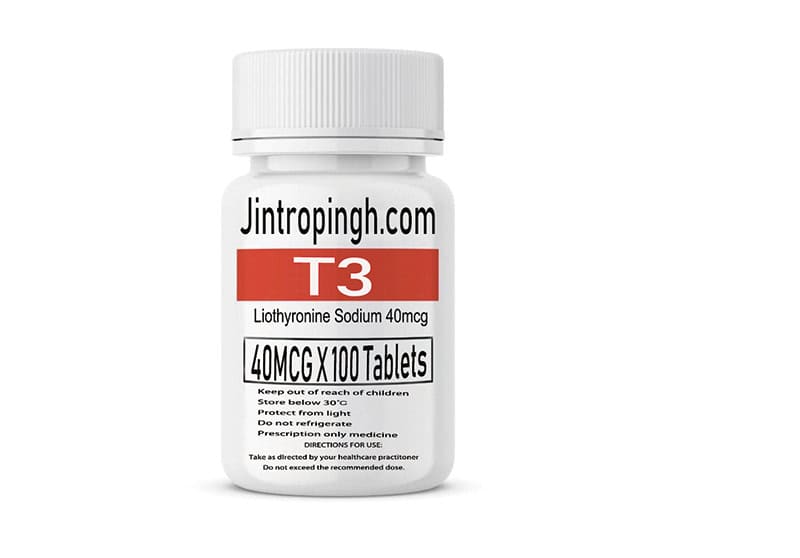
T3 Liothyronine sodium 40mcg 100pcs Oral Steroids Tablets
Original price was: $110.00.$50.00Current price is: $50.00.


Reviews
There are no reviews yet.